teen wolf

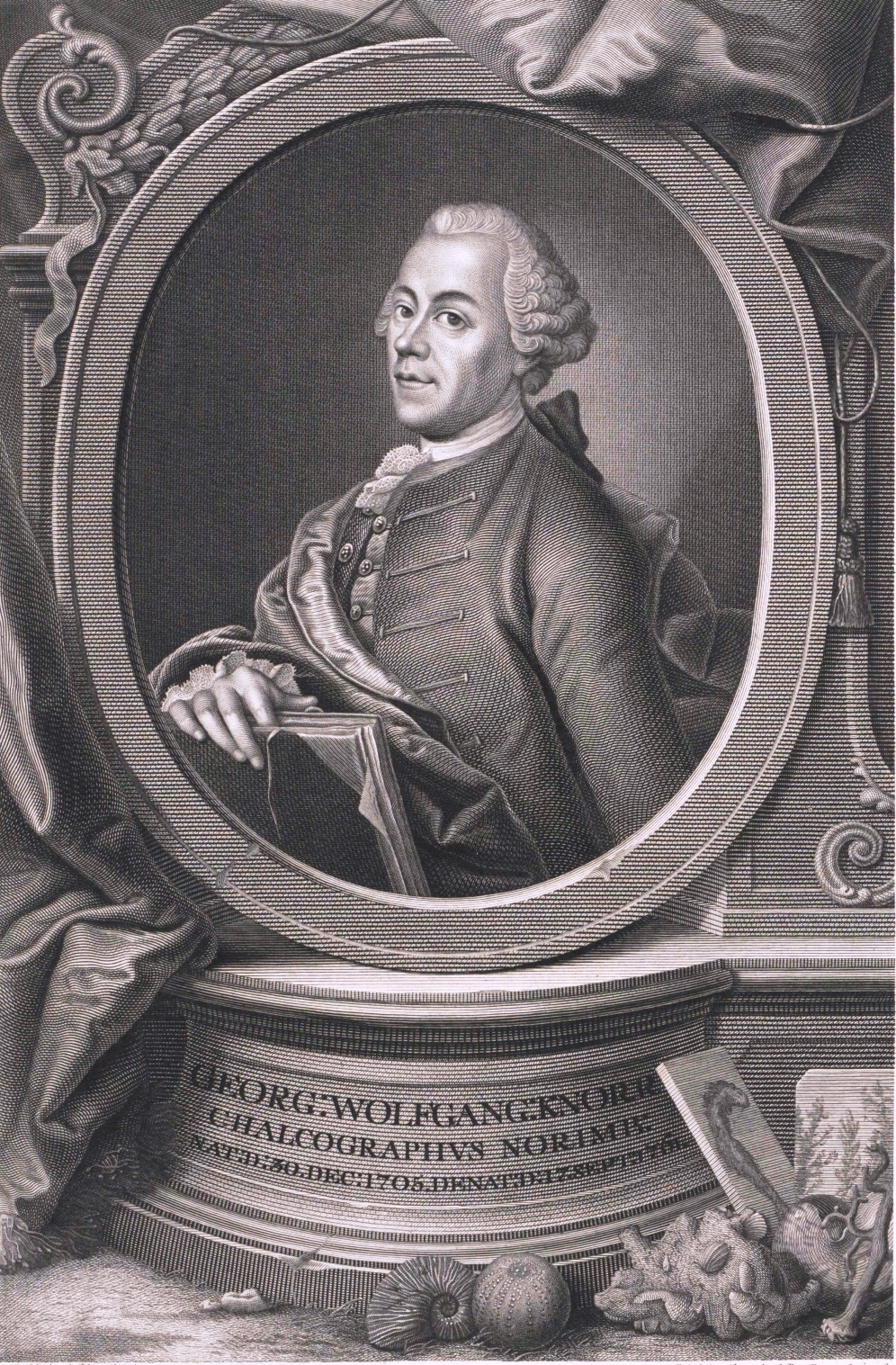
Georg Wolfgang Knorr was a German engraver, naturalist, and one of the first paleontologists of the 18th century.
Knorr was first apprenticed to his father as a lathe operator, and at the age of eighteen became a copper engraver for Leongard Blank, working with Martin Tiroff on the illustrations for Jacob Scheuchzer's Physica Sacra (1731). This work and his acquaintance with J.A. Beurer, a mineralogist and correspondent of the Royal Society, awakened Knorr's interest in natural history.
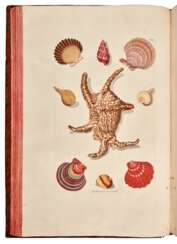
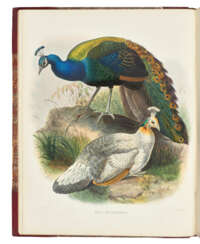
In the 1750s Knorr began publishing his own sumptuous folios. One of the most beautiful books of the eighteenth century is devoted to sea shells.






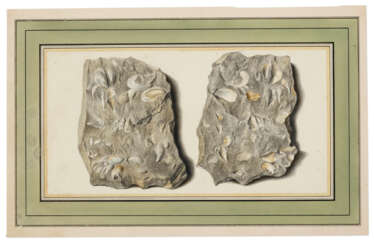

Georg Wolfgang Knorr was a German engraver, naturalist, and one of the first paleontologists of the 18th century.
Knorr was first apprenticed to his father as a lathe operator, and at the age of eighteen became a copper engraver for Leongard Blank, working with Martin Tiroff on the illustrations for Jacob Scheuchzer's Physica Sacra (1731). This work and his acquaintance with J.A. Beurer, a mineralogist and correspondent of the Royal Society, awakened Knorr's interest in natural history.
In the 1750s Knorr began publishing his own sumptuous folios. One of the most beautiful books of the eighteenth century is devoted to sea shells.


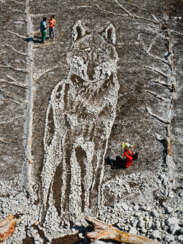


Vik Muniz is a Brazilian artist and photographer. Initially a sculptor, Muniz grew interested with the photographic representations of his work, eventually focusing completely on photography. Primarily working with unconventional materials such as tomato sauce, diamonds, magazine clippings, chocolate syrup, dust, dirt, etc., Muniz creates works of art, referencing old master's paintings and celebrity portraits, among other things, and then photographs them. His work has been met with both commercial success and critical acclaim, and has been exhibited worldwide. He is currently represented by Galeria Nara Roesler based in New York and Brazil.



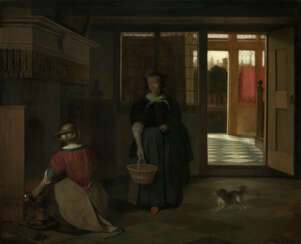

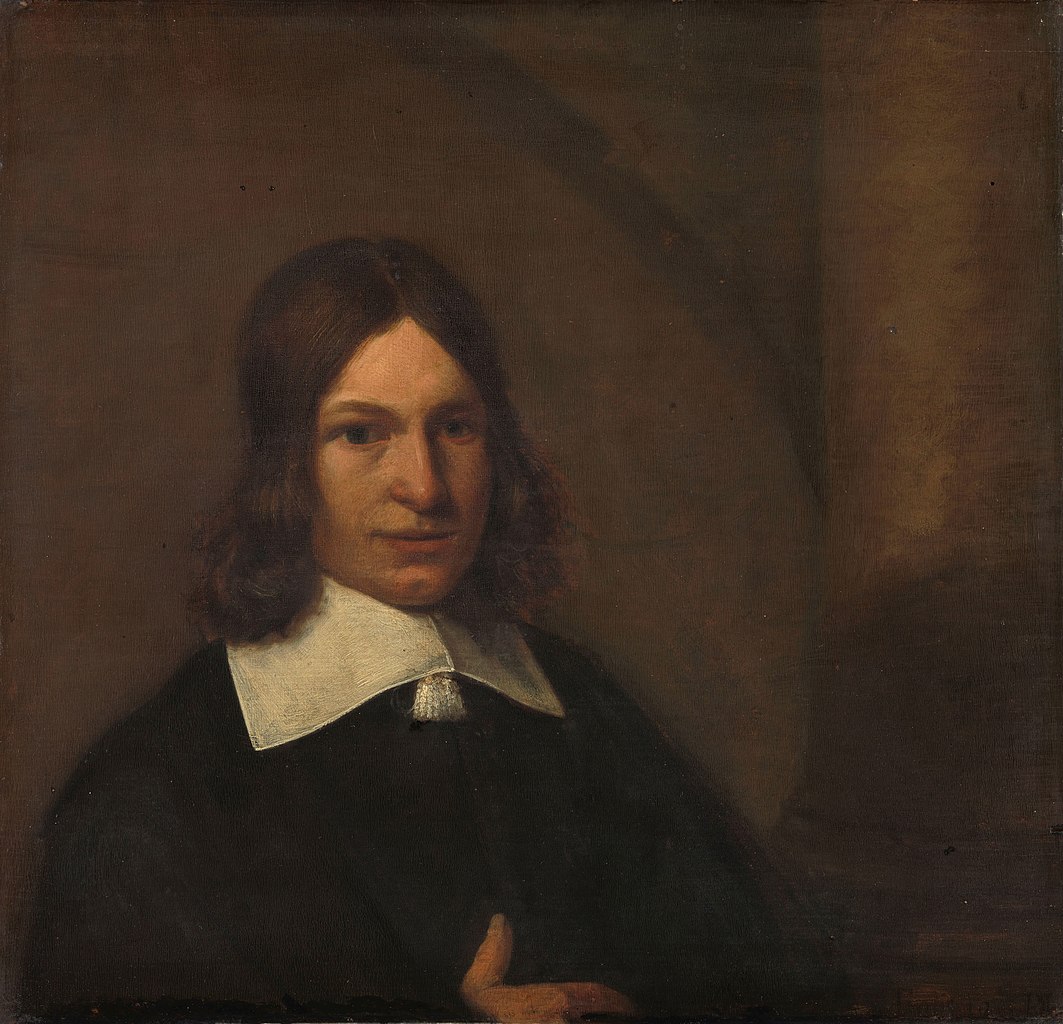
Pieter de Hooch was a Dutch Golden Age painter famous for his genre works of quiet domestic scenes with an open doorway. He was a contemporary of Jan Vermeer in the Delft Guild of St. Luke, with whom his work shares themes and style.



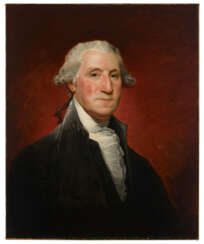

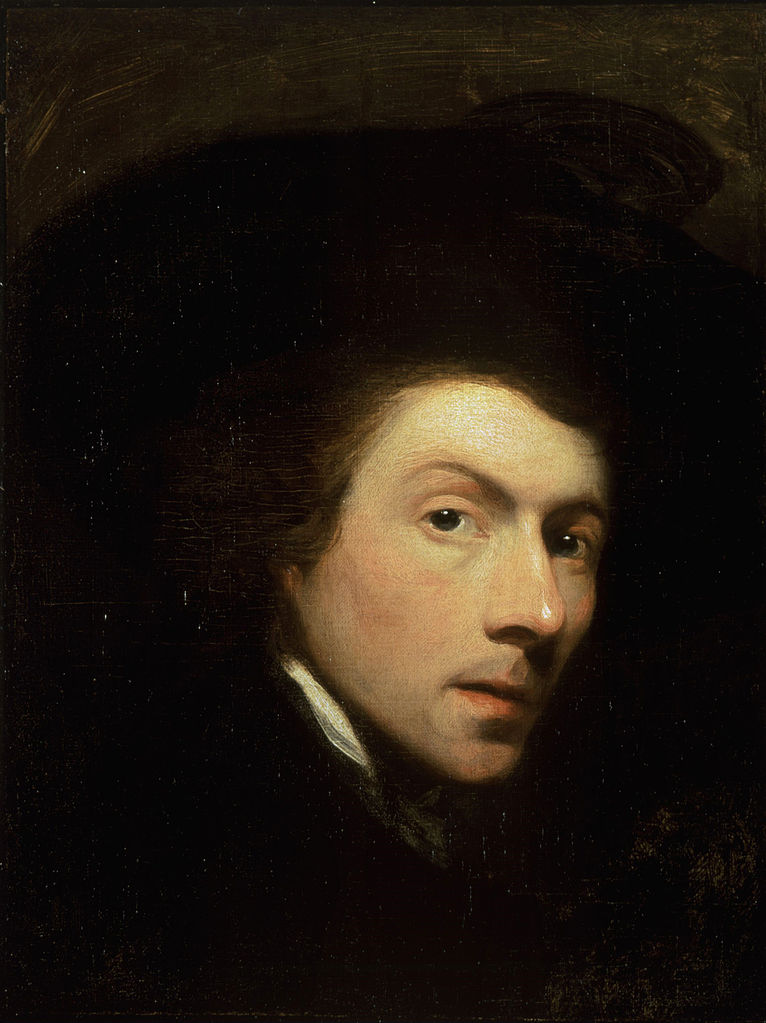
Gilbert Charles Stuart was an American painter from Rhode Island Colony who is widely considered one of America's foremost portraitists. His best-known work is an unfinished portrait of George Washington, begun in 1796, which is sometimes referred to as the Athenaeum Portrait. Stuart retained the portrait and used it to paint scores of copies that were commissioned by patrons in America and abroad. The image of George Washington featured in the painting has appeared on the United States one-dollar bill for more than a century and on various postage stamps of the 19th century and early 20th century.
Stuart produced portraits of more than 1,000 people, including the first six Presidents. His work can be found today at art museums throughout the United States and the United Kingdom, including the Metropolitan Museum of Art and Frick Collection in New York City, the National Gallery of Art in Washington, D.C., the Philadelphia Museum of Art in Philadelphia, the National Portrait Gallery in London, Worcester Art Museum in Worcester, Massachusetts, and the Boston Museum of Fine Arts.
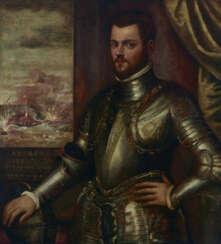

 Тинторетто. Автопортрет. 1588.jpg)
Jacopo Robusti Tintoretto was an Italian painter, a significant figure in the Venetian school, and one of the most notable artists of the late Renaissance. Born in Venice in 1518, Tintoretto was known for his rapid painting technique and bold brushwork, which both fascinated and sparked debate among his contemporaries. His early aspirations were evident when he was briefly apprenticed to Titian, a relationship that ended abruptly due to a clash of personalities or Titian's possible jealousy of Tintoretto's talent. Despite this setback, Tintoretto's self-driven studies, particularly his admiration for Michelangelo's drawing and Titian's coloring, shaped his artistic development.
Tintoretto's body of work is distinguished by its dramatic gestures and muscular figures, set in dynamic compositions with a masterful use of perspective and lighting, hallmarks of the Mannerist style. His paintings are celebrated for their emotional intensity and theatricality, elements that prefigured the Baroque movement. Among his numerous contributions to art and culture, Tintoretto's work in the Scuola Grande di San Rocco in Venice stands out, showcasing his skill in creating narrative and spiritual depth across a vast series of canvases dedicated to biblical stories and the life of Christ.
Significant works by Tintoretto include "The Last Supper" at San Giorgio Maggiore, which exemplifies his innovative approach to this traditional religious subject, and "The Miracle of the Slave," demonstrating his ability to convey divine intervention with dynamic realism. His legacy extends beyond his death in 1594, with his influence resonating in the works of later artists and contributing to the development of Baroque art.
Tintoretto's dedication to his craft and his unique approach to painting made him a pivotal figure in the transition from the Renaissance to the Baroque period. His works are housed in prestigious museums and galleries worldwide, continuing to inspire and captivate audiences with their intensity and beauty.
For collectors and experts in art and antiques, Tintoretto's oeuvre represents not only a high point of Venetian painting but also a bridge between eras in art history. His innovative techniques and expressive style offer rich insights into the evolving aesthetics of his time.
To stay updated on exhibitions, sales, and auction events related to Jacopo Robusti Tintoretto's work, signing up for updates is recommended. This subscription ensures access to the latest information on available pieces and upcoming showcases, tailored specifically to enthusiasts of Tintoretto's groundbreaking contributions to art and culture.
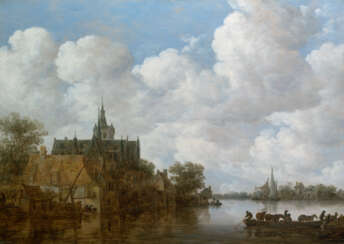

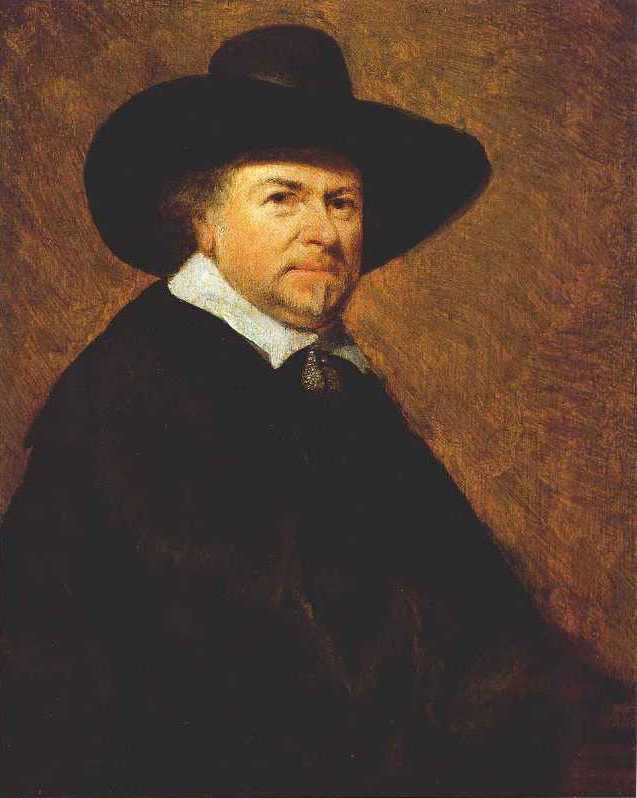
Jan Josephsz. van Goyen was a Dutch landscape painter and draftsman of the Golden Age, a member of the Guild of St. Luke of Leiden, and a representative of the so-called tonal landscape. Van Goyen specialized in landscape painting and left many paintings depicting forest paths, rivers, lakes, and canals. He also painted peasant huts and the outskirts of towns.
Jan van Goin was one of the most prolific painters of the 17th century: some 1,200 paintings he created and some 800 drawings have survived.


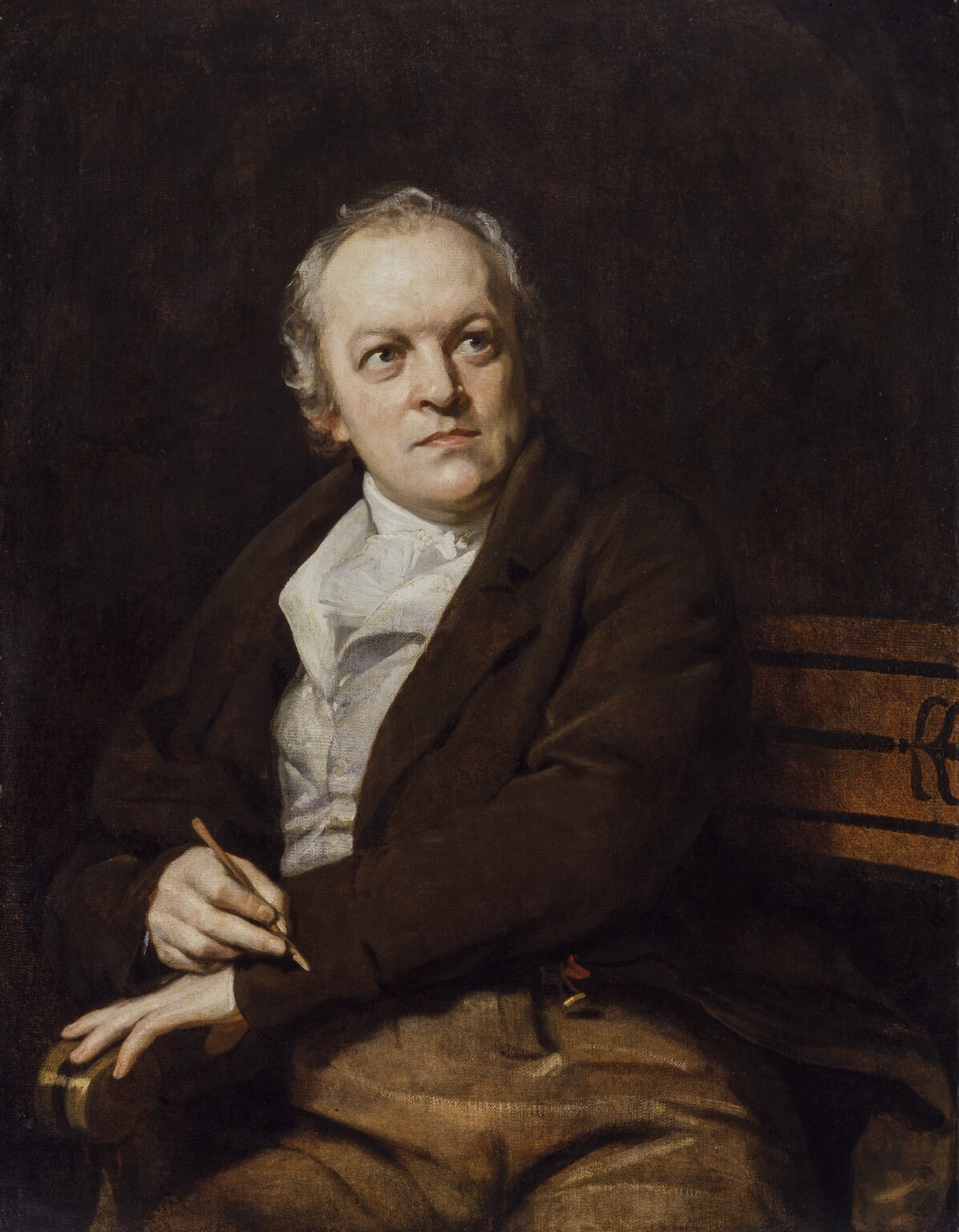
William Blake was an English poet, painter, and printmaker. Largely unrecognised during his life, Blake is now considered a seminal figure in the history of the poetry and visual art of the Romantic Age. What he called his "prophetic works" were said by 20th-century critic Northrop Frye to form "what is in proportion to its merits the least read body of poetry in the English language". His visual artistry led 21st-century critic Jonathan Jones to proclaim him "far and away the greatest artist Britain has ever produced". In 2002, Blake was placed at number 38 in the BBC's poll of the 100 Greatest Britons. While he lived in London his entire life, except for three years spent in Felpham, he produced a diverse and symbolically rich collection of works, which embraced the imagination as "the body of God" or "human existence itself".


William Blake was an English poet, painter, and printmaker. Largely unrecognised during his life, Blake is now considered a seminal figure in the history of the poetry and visual art of the Romantic Age. What he called his "prophetic works" were said by 20th-century critic Northrop Frye to form "what is in proportion to its merits the least read body of poetry in the English language". His visual artistry led 21st-century critic Jonathan Jones to proclaim him "far and away the greatest artist Britain has ever produced". In 2002, Blake was placed at number 38 in the BBC's poll of the 100 Greatest Britons. While he lived in London his entire life, except for three years spent in Felpham, he produced a diverse and symbolically rich collection of works, which embraced the imagination as "the body of God" or "human existence itself".
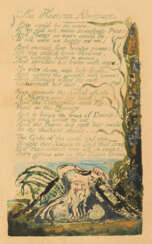

William Blake was an English poet, painter, and printmaker. Largely unrecognised during his life, Blake is now considered a seminal figure in the history of the poetry and visual art of the Romantic Age. What he called his "prophetic works" were said by 20th-century critic Northrop Frye to form "what is in proportion to its merits the least read body of poetry in the English language". His visual artistry led 21st-century critic Jonathan Jones to proclaim him "far and away the greatest artist Britain has ever produced". In 2002, Blake was placed at number 38 in the BBC's poll of the 100 Greatest Britons. While he lived in London his entire life, except for three years spent in Felpham, he produced a diverse and symbolically rich collection of works, which embraced the imagination as "the body of God" or "human existence itself".
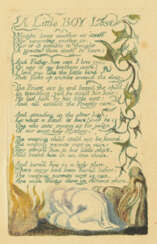

William Blake was an English poet, painter, and printmaker. Largely unrecognised during his life, Blake is now considered a seminal figure in the history of the poetry and visual art of the Romantic Age. What he called his "prophetic works" were said by 20th-century critic Northrop Frye to form "what is in proportion to its merits the least read body of poetry in the English language". His visual artistry led 21st-century critic Jonathan Jones to proclaim him "far and away the greatest artist Britain has ever produced". In 2002, Blake was placed at number 38 in the BBC's poll of the 100 Greatest Britons. While he lived in London his entire life, except for three years spent in Felpham, he produced a diverse and symbolically rich collection of works, which embraced the imagination as "the body of God" or "human existence itself".


William Blake was an English poet, painter, and printmaker. Largely unrecognised during his life, Blake is now considered a seminal figure in the history of the poetry and visual art of the Romantic Age. What he called his "prophetic works" were said by 20th-century critic Northrop Frye to form "what is in proportion to its merits the least read body of poetry in the English language". His visual artistry led 21st-century critic Jonathan Jones to proclaim him "far and away the greatest artist Britain has ever produced". In 2002, Blake was placed at number 38 in the BBC's poll of the 100 Greatest Britons. While he lived in London his entire life, except for three years spent in Felpham, he produced a diverse and symbolically rich collection of works, which embraced the imagination as "the body of God" or "human existence itself".
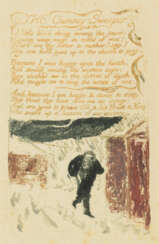

William Blake was an English poet, painter, and printmaker. Largely unrecognised during his life, Blake is now considered a seminal figure in the history of the poetry and visual art of the Romantic Age. What he called his "prophetic works" were said by 20th-century critic Northrop Frye to form "what is in proportion to its merits the least read body of poetry in the English language". His visual artistry led 21st-century critic Jonathan Jones to proclaim him "far and away the greatest artist Britain has ever produced". In 2002, Blake was placed at number 38 in the BBC's poll of the 100 Greatest Britons. While he lived in London his entire life, except for three years spent in Felpham, he produced a diverse and symbolically rich collection of works, which embraced the imagination as "the body of God" or "human existence itself".


William Blake was an English poet, painter, and printmaker. Largely unrecognised during his life, Blake is now considered a seminal figure in the history of the poetry and visual art of the Romantic Age. What he called his "prophetic works" were said by 20th-century critic Northrop Frye to form "what is in proportion to its merits the least read body of poetry in the English language". His visual artistry led 21st-century critic Jonathan Jones to proclaim him "far and away the greatest artist Britain has ever produced". In 2002, Blake was placed at number 38 in the BBC's poll of the 100 Greatest Britons. While he lived in London his entire life, except for three years spent in Felpham, he produced a diverse and symbolically rich collection of works, which embraced the imagination as "the body of God" or "human existence itself".
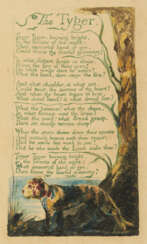

William Blake was an English poet, painter, and printmaker. Largely unrecognised during his life, Blake is now considered a seminal figure in the history of the poetry and visual art of the Romantic Age. What he called his "prophetic works" were said by 20th-century critic Northrop Frye to form "what is in proportion to its merits the least read body of poetry in the English language". His visual artistry led 21st-century critic Jonathan Jones to proclaim him "far and away the greatest artist Britain has ever produced". In 2002, Blake was placed at number 38 in the BBC's poll of the 100 Greatest Britons. While he lived in London his entire life, except for three years spent in Felpham, he produced a diverse and symbolically rich collection of works, which embraced the imagination as "the body of God" or "human existence itself".